A white (faranje) adoptive mother to two Ethiopian (habesha) girls wends her way through
Exotic Ethiopian Cooking by D. J. Mesfin

Friday, June 11, 2010

Ack!


"our" beach at the Cape (it's a public beach, but we like to pretend it's ours )


So things ended up getting a little crazy around here and I have dropped the proverbial ball.  Alas, I am no Julie Powell.  She didn't have to contend with things like business trips and The Ethiopians' third birthday, their well-child doctor's visit, their first visit to the dentist, and boning up on defensive and offensive maneuvers in the quest to get spots in swimming lessons and drop-off day camp.  It's cutthroat here.  I've heard stories of mothers starting to arrive in the parking lot at like 2:30 a.m., glaring at each other through windshields, daring the others to make the first move.  Not me.  I like my sleep too much.  Yet, I still got all the days in day camp that I wanted!  All while one of The Ethiopians hung from my leg, loudly crying "but I don't WANT to go to day camp, it's yucky" (the person at the desk registering us seemed largely unfazed, fortunately).  However, swim lessons is another story entirely and that sign-up isn't until tomorrow.  We don't always get into swim lessons because I just can't take seriously the mental and physical training necessary to ensure successful registration.  


Anyway, I figured I was going to have to take an informal sabbatical after Memorial Day, as our summers are insane, from Memorial Day to Labor Day: here for a week, there for a week, somewhere else for another week, on my dad's boat for a few days, catching a few tunes for a few more days, preschool orientation, spending time with family here and here and here (eventually ending up either here or here) and maybe here.  All while slogging through the summer reading list for preschool; juggling day camp, swimming lessons, toddler baseball (we're looking forward to the sheer entertainment value this promises to present), and other myriad activities; and just enjoying the summer with the girls before they start preschool in the fall.  Unfortunately, the insanity started a bit early this year.  


That's not to say that I'm not going to be doing nothing entirely in terms of Ethiopian cookery (I have some things on the burner that require some nice hot, sunny days for drying things and I'm seriously considering buying this with my birthday money), but I'm going to officially release myself from expectations.  If I manage to make something over the summer, I'll report it on here!


Have a great summer and I promise to be back at it in the fall!  

Tuesday, April 20, 2010

Samma We't (Spinach-Like Plant Sauce "Nettle")

"Samma is made on very rare occasions and only during Lent.  It is made from a hairy, leafy shrub which grows wild and stings the skin when touched.  Use of rubber or plastic gloves will prevent skin irritation.  It looks like spinach after it has been cooked."  ~ D. J. Mesfin, Exotic Ethiopian Cooking, p. 179


According to the random number generator, I was supposed to have made this dish back in February, but random.org  failed to take into account the fact that stinging nettles are a very seasonal crop and aren't ready until late March/early April (and then their growing season is really only about a month long).  


Despite knowing exactly where I could find a lush, healthy wild crop I decided to take the easy way out.  Back in February, I signed up to receive an e-mail when the nettles came back into season, and I received that e-mail a couple of weeks ago or so.  Last Monday, these were waiting for me on my doorstep! 


 the apparent discoloration is only an illusion 


My original intent was to hold off until the weekend to make this dish, but by Thursday, I noted that the nettles were starting to wilt, so I steamed them up so that they would then keep a few more days until I could finish the dish.  The book says to rub the leaves through a sieve, chop them, and put them into boiling water.  I kind of did things a bit backwards and just steamed them to start. 


two pounds is a lot of nettles

Because these were very young nettles, I didn't notice any sting (and I do know what nettle stings feel like).  I handled them with my bare hands without any problem.  They steamed up well, just like spinach, and turned a most gorgeous dark shade of green.  

steamed and packaged for later

When I was ready to finish the dish, I put the cooked nettles into the food processor and chopped them up.  I skipped the sieve part, largely because I wasn't sure what the purpose was.  


Back into the big pot the nettles went (though it had decreased a great deal in bulk, there was still a sizable amount vegetable matter to be dealt with) and they were mixed with some barley flour:


Then the instructions said to add a little warm water until the mixture became thin, so I started to do just that: 


A minute or two into this process, I wondered to myself if there might have been a specific amount of water mentioned in the ingredient list, as I wasn't sure how "thin" I was supposed to get it.  Sure enough, there was.  I wasn't sure how much I had added before I realized this, so I just added the whole amount anyway, figuring I could always boil it down if I needed to.  Some garlic was also added:


The we't was cooked for about 15 minutes, after which salt was added.  At this point, the instructions became a little unclear: "When done, add salt, remove from heat, pour into bowl and cook before serving".  Wasn't I just cooking it?  Perhaps it's a typo and was meant to be "cool"? 


I chose to eat it hot and liked it.  The flavor of the nettles is quite crisp; stronger than spinach, but not unpleasant, in my opinion, but I like wild greens (dandelion greens, burdock greens, miner's lettuce, really any greens, except for mustard and watercress).  I've been eating it for lunch this week.  

My husband refused to even taste it.  The Ethiopians had a few bites the day I made it and take a bite or two when I'm having it for lunch, but they're not passionate about this dish, perhaps because it lacks berbere and wasn't served with injera.  It's certainly not a vegetable aversion, as they were eating their weight in Brussels sprouts at lunch today.  

If you're not interested in working with the nettles, I saw it suggested somewhere on-line that you can try watercress instead, or, frankly, you can probably just make this with spinach.  I do think that a stronger-tasting green, like watercress, will work better than mild spinach, however.  

For the health benefits of nettles, and more nettle recipes, click here. 

Monday, April 12, 2010

Ye'assa T'ibs (Fried Fish)

"Ye'assa T'ibs, Ethiopian style, may also be prepared with whole fish.  Cleaned inside and out with water and lemon and fried the same way coated with flour.  Serve with a wedge of lemon." ~ D. J. Mesfin, Exotic Ethiopian Cooking, p. 156

Ye'assa t'ibs on the right; the rest of the plate consists of iskunfur.


I present to you now an authentic Ethiopian dish that I think almost anyone would eat, except my brother or anyone allergic to fish.  No, not the stuff at the top of the plate (definitely not the stuff at the top of the plate; good luck finding anyone to eat that, save for my 2-year-olds).  The stuff on the right.  Where I grew up, we called that "fish fry" and Ted's was the place to get it.  I know, I know, I forgot the wedge of lemon.  

In Amharic, it's called ye'assa t'ibs.  And if there's anything the (my) Ethiopians like better than berbere, it's seafood.  I come from New England stock and can think of few things better than a lobster bake on a beautiful summer evening.  Chowder, lobster, clams, fish...pass them all, please!  This is one of the great passions shared between myself and the Ethiopians; if I can manage to get any after they've finished eating it, that is.  Despite their being from a landlocked country*, they have yet to meet a fish, a crustacean, or a mollusk that they don't like.  

I was going to be making ye'assa t'ibs anyway, but due to a business trip and Easter, I had gotten a couple of weeks behind, so I decided to make the ye'assa t'ibs in conjunction with something that I knew wasn't going to go over quite as well: the iskunfur.  As it turned out, the ye'assa t'ibs were delicious with the sauce from the iskunfur, even if one didn't partake of the stuffed tripe itself.  

Ye'assa t'ibs is quick and easy to make, and you probably have all of the ingredients at hand: fish, flour, black pepper, salt, and oil!  Nothing exotic and no need to stop by the Asian grocery!  

If you wanted to be most authentic, you could go with tilapia or catfish, species of which are found in the lakes of Ethiopia.  I decided to go with cod, however.  

You start by mixing the flour with the black pepper and the salt:


Then you dredge the fish in the mixture.  I usually like to use a big plastic bag for coating and dredging, but I happen to be all out, so I did it in a bowl.


all dredged and waiting for the frying pan


Heat up the oil and throw the fish in:


And fry until it's nice and golden.  That's it!  See how easy that was?  And it's authentic....or else it wouldn't be in the book!  

I do have to admit that I had to resist the very real temptation to add some tartar sauce.  

~~~

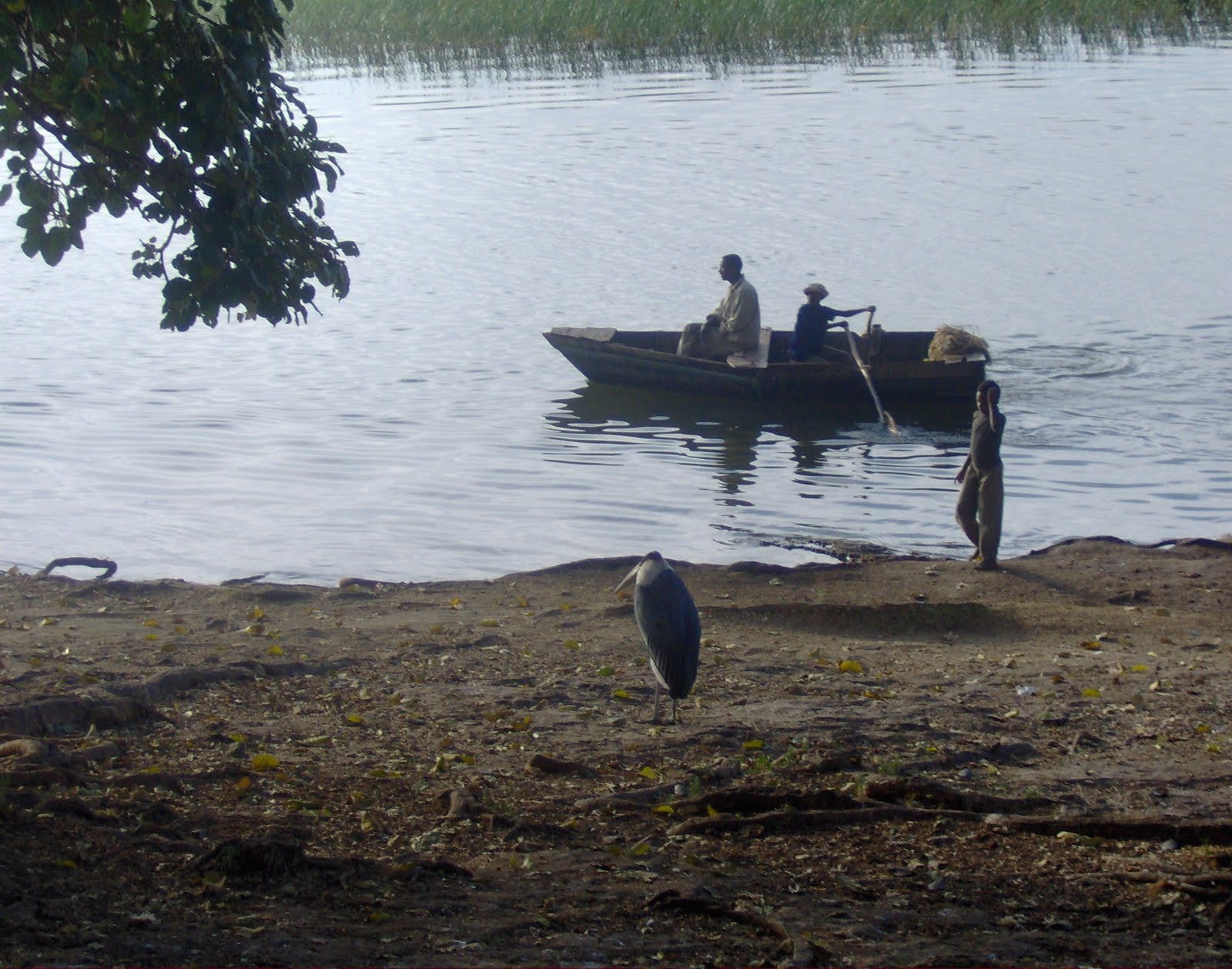
* There are, however, beautiful lakes in Ethiopia that are fished and we even visited a fish market at Lake Awassa when we were there.  Here are some pictures:


Iskunfur (Stuffed Tripe Stew)

"Iskunfur is a delicious sauce prepared for special occasions.  It may be eaten with injera or bread as a main dish or served with rice and vegetables as a side dish." ~ D. J. Mesfin, Exotic Ethiopian Cooking, pp. 132-3


Iskunfur, top, with its sauce on the left; on the right is ye'assa t'ibs.

I dreaded this day.  When I first looked through Exotic Ethiopian Cooking, I noticed there were a few recipes that involved offal.  According to Wikipedia, "People in some cultures shy away from offal as food, while others use it as everyday food, or even in delicacies that command a high price."  Let me be perfectly clear that I am in firmly embedded in the first camp: those that "shy away from offal as food".  Indeed, I actually shy away from it even when it's merely a concept.  I don't even like trimming meat at home, though I do it.  

I figured it would be inevitable, though, and, sure enough, suddenly page 132 was staring me in the face.  What to do, what to do?  I am fairly confident in believing that few, if any, of my followers would blame me if I just skipped a recipe, but I felt like to do so would be entering morally ambiguous territory.  Julie Powell didn't skip over the less-appetizing recipes in Mastering the Art of French Cooking.  Not only that, but she then moved on to write a book about butchering, which is is officially where any resemblance between us falls away.  Far, far away. 

So, in the interest of full accountability, I bring you iskunfur, or stuffed tripe stew.  While making this recipe, I had to totally dissociate myself from what I was handling, but if you're interested in details, you can head here. 

The beginning of the recipe is quite familiar:


 Cook the onions in a dry pan, then add the nit'ir qibe and berbere.


I used one tablespoon less of butter than was called for in the recipe simply because the sauce called for one cup and the stuffing called for a tablespoon.  I really hated to dig into a whole container (holding one cup) of nit'ir qibe just for one tablespoon, so I decided to just take it from the sauce's allotment.  

To this was also added (clockwise from top) some false cardamom (black cardamom), ginger, black pepper, and garlic.  


False (black) cardamom is an interesting creature and entirely different than the cardamom that you can find in your grocery store (which is green cardamom).  Unlike the tiny, fingertip-sized green cardamom pods, false cardamom pods are about an inch long.  They carry the strong scent of antiseptic (camphor some would say, but despite being a devotee of Campho-Phenique as a child, I don't quite pick up the camphor notes).  


I have to run them through my coffee grinder to get them into a powder form:


After setting the sauce mixture aside, I assembled the stuffing for the tripe, which involved using one tablespoon of the nit'ir qibe, a small amount of chopped red onion, some more false cardamom, ginger, and black pepper, and some cooked rice.  I cheated on the rice and used already cooked, frozen rice:


This was all combined together, but it seems I neglected to snap a picture of it by itself in the bowl.  

Next, I finally had to confront the tripe.  I'll understand if you need to leave now:


I had no idea Ethiopian cooking would involve geometry problems, but sometimes it does.  For instance, I needed to cut 4- to 6-inch squares from something that most assuredly is not square.  Or even regular in shape.  I took out the ruler and measured 6 inches, but thought that was too big, so I elected to go with the 4-inch squares.  I just used my scissors to cut the tripe into the squares. 


Into this, I put a tablespoon of the stuffing (now you can see what the stuffing looks like):


I was then instructed to "sew them up with needle and thread".  I was a bit uncertain as to what kind of thread to employ and what kind of stitch (running? blanket? back?) and worried about how easy it would be to undo the thread so that it wouldn't be eaten (I did plan on trying some).  I also didn't really want to be in such close, sustained contact with this stuff, so I opted for toothpicks, which did the job, even if they left a bit to be desired aesthetically.

this was the first one I did

I eventually changed my technique and more or less 
just folded over the square, securing it on three sides with the toothpicks


These little packets were then added to the berbere sauce to simmer while I went to the Abyssinian and picked up the injera:


I knew my husband wasn't going to even try the tripe, so I made another dish -- ye'assa t'ibs -- to go with this one (due to Easter, I was a bit behind with the recipes, anyway, so it was also an opportunity to catch up a bit; the post for the ye'assa t'ibs should be up later today) and plated them together on the same injera.  I knew the berbere sauce would be eaten, so I ladled some of that out separately.  


a cross section of the stuffed tripe

The Ethiopians loved this and even ate the tripe.  They will turn their nose up at boxed macaroni and cheese and SpaghettiOs, but will eat stuffed tripe.  Sad to say, they won't be getting a lot of it.  I gave it a try, but couldn't get past the texture.  I rank all of my culinary adventures next to one I had in Thailand, which involved eating something called "jumping shrimp salad".  And the reason the shrimp were jumping was because they were still alive.  I'll take jumping shrimp over tripe any day.  

The sauce, however, was very good.  I think I prefer a more traditional we't sauce; this one had a bit more false cardamom in it than the others and the flavor definitely reflected that, but it was good in its own right and it did make a great dipping sauce for the the ye'assa t'ibs!  

In other news, the stinging nettle leaves have come into season and I have ordered some for the samma we't that I had to skip over earlier in the year (precisely because the nettle leaves are only in season for about a month, and February was not the month).  

And if you're wondering where the yebunna t'ej went, it's done and I meant to decant it at Easter, but forgot all about it.  My husband and I will have to have our own private t'ej tasting and I'll get a post up (and if anyone wants me to send them some, just e-mail me with your address and you can join in the tasting, too).  

Look for a post about the ye'assa t'ibs a bit later in the day!

Sunday, April 4, 2010

A Little Break for Easter

I haven't forgotten my mission here; it's just been a hectic couple of weeks, starting with some minor elective surgery and a week's recuperation for my husband and ending, tomorrow, with Easter dinner, the only holiday I host at this point in time.  I've got the plans, though, and I need to get back into the groove next week, as the Ethiopians are feeling the lack of Ethiopian food.  At one point last week, they were playing outside with us and I had to go in to start dinner.  With eyes and face full of excitement and hope, one of them ran up and asked "are you going to make 'opian for dinner, Mama?"  Sadly, I wasn't.  


Tonight, as I worked on preparing all that I could ahead of time for Easter dinner, I was reminded of what my husband said to me after my nit'ir qibe post: "Why don't you ever show the aftermath?"  He can ask this because he's in charge of aftermath 99% of the time; we long ago brokered a deal where I cook and he cleans up.  The greatest part is we both think we got the best end of the stick, except, perhaps, for nights involving nit'ir qibe or starting a holiday dinner for a dozen adults and three children.  Then I think he begins to have his doubts. 


So, without further ado, I offer the aftermath of tonight.  It's not an Ethiopian-inspired mess, but it's prodigious.  I dedicate this post to my husband.  


Wednesday, March 24, 2010

"Lucy's Legacy: The Hidden Treasures of Ethiopia - Recipes from Afar and Near"

Somewhere out in the blogosphere, I became aware of a book entitled "Lucy's Legacy: The Hidden Treasures of Ethiopia - Recipes from Afar and Near" and I managed to find myself a copy, which just arrived yesterday.  


If anyone is interested in some Ethiopian cookbook training wheels, this slim little volume (it has only 48 pages and 16 recipes) would fit the bill perfectly.  It was printed up for the Pacific Science Center (Seattle, WA) on the occasion of Lucy's first-ever tour outside of Ethiopia.  Lucy, or Dinkenesh, as she is called in Ethiopia, is a 3.18-million-year-old hominid skeleton that, for 30 years or so, was the oldest hominid skeleton ever to have been found.  We saw Lucy when we were in Ethiopia ourselves, and from October 4, 2008 to March 8, 2009, she made her home at the Pacific Science Center in Seattle.  


The recipes included in this book are:


*  Berbere (red pepper spice mix)
*  Nit'ir Qibe (spiced butter)
*  Injera (traditional bread)
*  Ayebb (Ethiopian cheese)
*  Greens
*  Ginfilfil (injera in spicy sauce)
*  Foul (fava beans with spicy sauce)
*  Doro Wot (chicken stewed in berbere sauce)
*  Kitfo (minced raw meat with spices)
*  Lamb Tibs (lamb in spicy sauce)
*  Shero Wot (spicy chickpea sauce)
*  Misser Wot (red lentil stew)
*  Curried Cabbage and Potatoes
*  Kategna (fried spicy injera)
*  Che'che'bsa (pan bread with spiced butter)
*  Vegetable Sambusas


It's quite a nice, representative mix, I think; you'd be able to recreate an injera platter like you'd get in a restaurant, complete with the little side dishes of Ethiopian cottage cheese and cabbage and potatoes.  And the authenticity factor looks good, albeit they do scale down the berbere measurements in several -- but not all -- of the dishes (the doro recipe only calls for 3 tablespoons as compared to one cup in Exotic Ethiopian Cooking, but the ginfilil recipe calls for 3/4 of a cup, exactly the same amount as called for in Exotic Ethiopian Cooking).  


The recipe yields for the "staples", like berbere and nit'ir qibe, are also much more manageable for the occasional Ethiopian cook.  Instead of making 23 cups of nit'ir qibe, like the recipe in Exotic Ethiopian Cooking does, theirs makes two (and as for the berbere recipe, well, let's just say that the one in Exotic Ethiopian Cooking starts out with 15 POUNDS of red chili peppers, while theirs starts with 1/2 cup of dried, ground chili peppers).  


If Exotic Ethiopian Cooking leaves you feeling a bit overwhelmed, but you're still interested in trying your hand at Ethiopian cooking, I think this book would be ideal place to start. 


In addition to the recipes, there are also little educational tidbits sprinkled throughout the pages.  At the first mention of fenugreek, the opposite page gives a little history and information on this herb; teff receives similar treatment.  There's some folklore, some cultural information (meals, religion, proverbs), some facts, and even some Amharic words and phrases!  In addition to all of this, it's an aesthetically pleasing book to look at, filled with mostly line drawings, with an occasional charcoal or pastel piece here and there.  


Where to find it?  That would be the question.  Let me introduce you to my favorite book-sourcing website, AddALL.  This link here should pull up sources for Recipes from Afar and Near, but if you just want to do a search for it on your own, the ISBN is 9781933245140.  

Sunday, March 21, 2010

T'ibs We't (Fried Beef Stew)

"T'ibs We't is prepared on occasions as a main dish.  It is very delicious with injera or bread and a little homemade yoghurt or cottage cheese." ~ D. J. Mesfin, Exotic Ethiopian Cooking, p. 107


Dinner was about two-and-a-half hours ago and my husband and I are still talking about how good the t'ibs we't was.  My husband proclaimed it the best thing I've made yet and even added that it was better than the t'ibs we get at our local restaurant, the Abyssinian.  This was also, by far, the spiciest thing I've made, and it was teetering dangerously on the precipice between "spicy" and "intolerably hot".  I added the cottage cheese because I was worried that it was going to be way too spicy hot for the Ethiopians, but they plunged right in and kept going back.  They'd take a bite, gasp, say it was spicy, and you'd think they were about to cry in sheer misery, yet as they were complaining about it being spicy, their hands were already in there for another bite.  When it temporarily overpowered them, they asked to sit in our laps while they had some milk and plain injera, but within minutes, they'd be back into the we't.  I ended up eating most of the cottage cheese, yet was doing the same thing they were...as spicy as it was, my hand kept going back in for more and I felt my brain being washed in the endorphins that were triggered by the spiciness.  My husband, meanwhile, was calling for a seconds to be ladled onto the injera while wiping sweat from his forehead.  Man, this was good; I am totally blissed out.  

It is also a pretty simple dish to make.  It's not the first time I've made it (it was one of the first dishes I made, as I mentioned in my blog post from yesterday).  This was, however, the best batch I've ever made.  

You start with the red onions:

before

After chopping, throw them into a dry frying pan and cook them until they turn a brownish-red color.  While I was cooking these, I was also chopping up the beef and wasn't keeping as close an eye on these as I should have and they started sticking a little to the pan. If this happens, just throw a little water in there and stir until the water evaporates.  

after

Then you add the nit'ir qibe (I had made a fresh batch just last night).  


I mentioned in the blog post about nit'ir qibe that the last several cups from the bottom of the pan were a bit sludgy.  The puck of butter on the left is pure nit'ir qibe without the sludge, and the puck on the right is one of the sludgy ones (the most sludgy one, in fact).  You can see the sludge on the top of the puck, but I can assure you it didn't affect the end result one bit, aside from cutting the butter content a tad.  

all melted

One of the things I find amusing when I find some recipes for Ethiopian food on the web (usually posted by a westerner, not an Ethiopian) is the amount of berbere called for.  The upper limit usually seems to be one tablespoon; occasionally, there is an asterisk mentioning that if you like things really spicy, throw in an extra tablespoon of berbere.  

Mr. Mesfin does not mess around.  Here is his idea of a berbere measurement:


That would be a cup.  A cup.  Most of the we'ts in this book call for a cup of berbere for a dish that serves from six to eight people.  I love my berbere:


It's the same exact stuff we brought home from Ethiopia, but not the exact bag, as the bags are only 1 kg. and three or four we'ts will wipe that out.  Thanks to the generosity of many, I keep finding myself with more bags of berbere from Selam Baltena.  If you're reading this and will be traveling to Ethiopia in the near future, I am always looking for more berbere.  If you'd be willing to bring a bag back, please e-mail me!  

with the berbere added

After the berbere, you throw in some red wine (or t'ej, if you have it). 


Meanwhile, I had taken a bunch of stew meat (it was a "family pack" of mixed beef chunks) and cut it into small cubes, both so it would be more tender and easier to eat.  


I browned the meat in a dry pan.  A lot of liquid and fat was expelled from the meat as it was cooked; I never know whether I should drain it or use it in the stew.  Tonight, I just kept cooking the meat until all the extra liquid had evaporated.  Then came time to add the meat to the onion-berbere mixture.


I added some water to the stew and then the spices:


Moving clockwise from the salt, we have:

~ cardamom (I didn't have any ground cardamom, so I ground some cardamom pods in my coffee grinder)

~  ginger (I forgot I used up all my ground ginger for the yegebs siljo), so I ground some fresh ginger and used that

~  black cumin, which can be found in Asian markets as kalonji.  


I discovered that the Asian market I go to (Patel Bros.) is actually a chain!  So if you're wondering if there's one near you, head on over to here.  Mine is a great little market and I enjoy going there.  

~  cloves

~  garlic (I chopped my own tonight because I was out of my Dorot cubes)

~  black pepper

I should not have put in the salt because I forgot that the nit'ir qibe I made last night had been made with salted butter, and the t'ibs we't tasted a bit salty to me (though only to me, I guess, as my husband thought it was fine).  What I really should have done was used unsalted butter for the nit'ir qibe, but I forgot to specify this when I sent my husband out for butter.  

I wanted to add a note about the water here.  The we't recipes in this book often call for a couple of cups or more of water, and while I used the specified amount tonight, there are times when I feel like I don't want to water it down, and I either leave out the water entirely or use less.  It may take a fair bit of trial and error before you find the consistency and/or intensity you prefer. 

After adding the water and the spices, I let it simmer while we waited for my husband to get home with the injera (the recipe recommends simmering for 15 to 20 minutes; at this point, it can also go into a crock pot for as long as you want).  

Then, it was just a matter of digging in!


It's even later now, and I'm still all blissed out on berbere.